
Low transmission fluid can make a vehicle feel wrong before it gives a clear explanation. You might notice a delay when selecting Drive, an engine that revs higher than expected, a hard shift, a shudder, or a small puddle where the vehicle was parked. Those changes deserve attention because automatic transmissions rely on the right fluid level to lubricate parts, manage heat, and operate their hydraulic controls.
The important part is not to assume that every rough shift means the fluid is low. Similar symptoms can come from a leak, worn fluid, an electrical-control concern, internal wear, an engine issue, or another part of the drivetrain. The practical move is to notice the pattern, avoid putting more load on the vehicle, and have the cause checked before a small concern has time to become a larger repair.
Why the Right Fluid Level Matters
In many automatic transmissions, fluid does more than lubricate gears. It helps carry heat away and provides the hydraulic pressure that applies internal clutches. When the level is low, the system may not behave consistently. That can affect how promptly the vehicle engages a gear and how smoothly it shifts under load.
Fluid does not normally disappear. If it is low, a technician needs to consider where it went and whether the vehicle is leaking from a pan gasket, cooler line, seal, axle area, or another component. The fluid level may also be difficult to check correctly on newer vehicles. Many do not use a simple dipstick and instead require a specific temperature, engine condition, and factory procedure. That is one reason a quick top-off is not always a complete answer.
For routine service, start with the maintenance information for your exact vehicle. Ford's maintenance schedule lookup and Toyota's owner manual library are examples of manufacturer resources that can help identify the correct fluid and service guidance.
1. There Is a Delay When You Select Drive or Reverse
One of the common signs of low transmission fluid is a noticeable pause after moving the shifter into Drive or Reverse. You may select the gear, wait longer than usual, then feel the vehicle engage with a bump. A brief change on a cold morning does not automatically mean something is wrong, but a delay that is new, repeatable, or getting worse is useful information for an inspection.
Low fluid can be one reason for delayed engagement because the transmission may not build or maintain hydraulic pressure as it should. But it is not the only reason. Internal seals, control components, adjustment, or another drivability concern can produce a similar feeling. Note whether it happens cold or warm, whether it is worse on an incline, and whether the engine revs before the vehicle moves. That detail gives the technician a much better place to start.
2. The Engine Revs but the Vehicle Does Not Accelerate Normally
If you press the accelerator and the engine speed rises without the expected increase in road speed, drivers often describe the feeling as slipping. This can be especially noticeable while merging, climbing a hill, passing, or towing because the transmission is working harder. A low level can be part of that condition, but it does not prove the cause.
A worn clutch in a manual vehicle can create a similar symptom. In an automatic, leaks, fluid condition, hydraulic problems, electrical controls, and internal wear can all affect how power is transferred. Our guide to transmission slipping explains the broader symptom in more detail. Avoid repeatedly accelerating hard to test the vehicle. Extra heat and load can turn an intermittent issue into a more serious one.
3. Shifts Feel Hard, Late, or Uncertain
A vehicle should not regularly slam into gear, hunt between gears, or suddenly feel unsure about when to shift. Some shifts are naturally more noticeable under heavy acceleration or on a grade. The concern is a clear change from the vehicle's normal behavior, especially when it happens with a delay, flare, shudder, warning light, or leak.
Low transmission fluid is one possible reason, but the same symptom can also be influenced by engine performance, sensor information, battery or charging health, driveline movement, or transmission control issues. That overlap is why replacing parts from a symptom list is risky. A proper diagnosis looks at the whole pattern instead of treating one rough shift as a final answer.
4. You Notice a Burning Smell, Shudder, or New Noise
A hot or burnt smell can mean the transmission is running hotter than normal. Because fluid helps manage heat, a low level can make that condition worse. A shudder may feel like driving over a rumble strip, and a whine, hum, or grinding sound may change with speed or acceleration. These are worth taking seriously, but none of them identifies one failed part on its own.
Describe the symptom instead of trying to name the repair. Note whether the shudder happens while accelerating, cruising, turning, or changing gears. Notice whether the smell appears after a long drive, a grade, traffic, or towing. A transmission concern, torque converter issue, axle, differential, wheel bearing, tire problem, or engine misfire can sometimes feel similar from the driver's seat. Our drivetrain repair page explains the related components that can also affect how a vehicle feels on the road.
5. There Is Fluid on the Ground
A fresh spot under the vehicle is one of the clearest reasons to schedule an inspection. Transmission fluid can be red, reddish-brown, amber, or darker after use, depending on the fluid and the vehicle. Color alone is not a diagnosis, but the location, amount, smell, and timing can all help identify what is happening.
Do not assume any red-looking fluid is transmission fluid or that every leak can wait. A wet transmission pan, cooler line, seal area, or axle area needs to be located. Adding fluid without correcting the source leaves the system with the same leak and may make it harder to understand how quickly the level is dropping. A vehicle that is leaking heavily, struggling to move, or producing smoke or a strong burnt smell should not be driven farther just to see whether it improves.
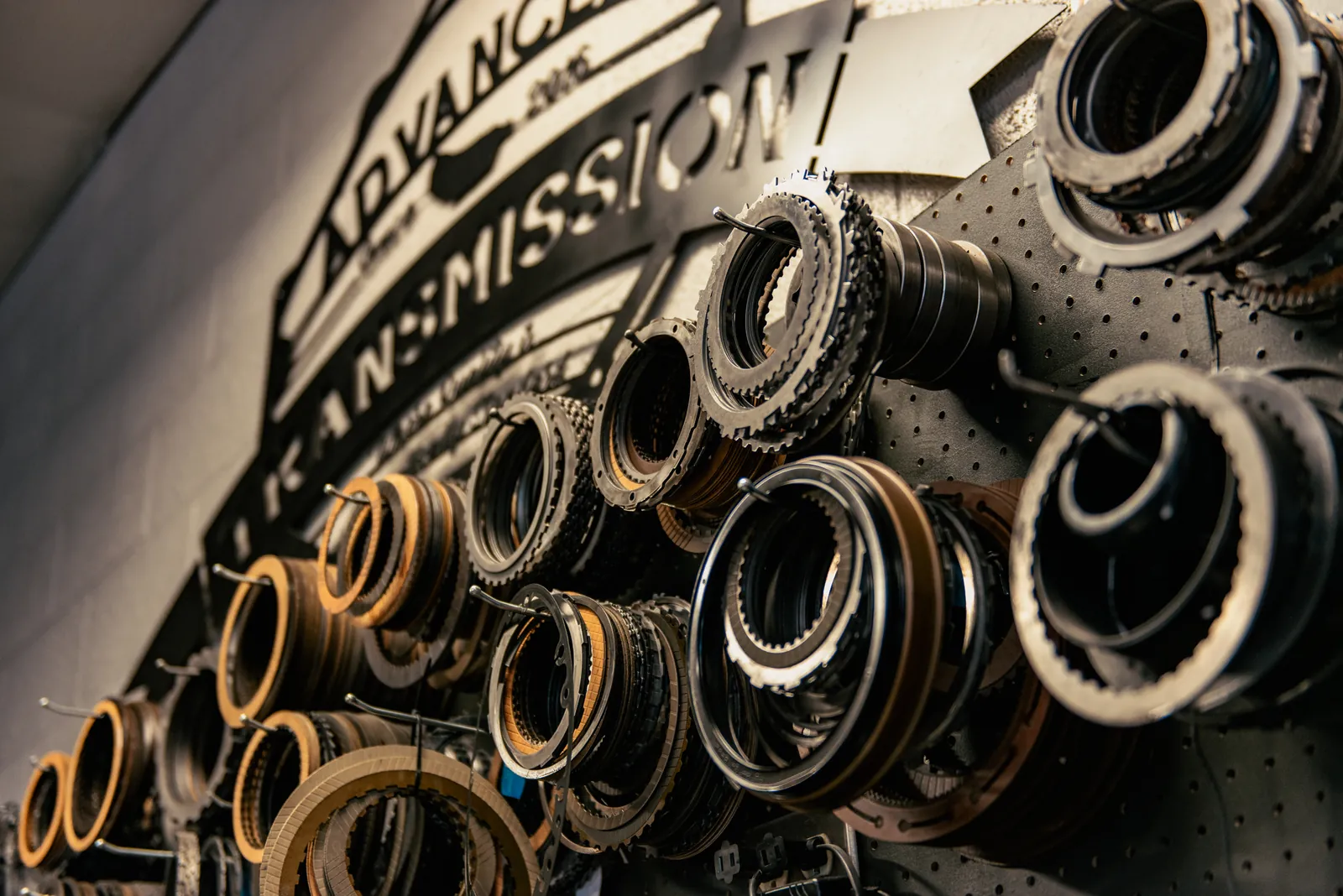
Low Fluid Symptoms Can Feel Like Other Problems
The most useful thing about a warning-sign checklist is knowing its limits. Low fluid can contribute to poor engagement, slipping, hard shifts, overheating, and noise, but those symptoms are shared by many other problems. Worn fluid may be part of the picture. A leaking seal may be the real source. A solenoid, sensor, internal clutch, torque converter, engine concern, or driveline part can also change how the vehicle drives.
That is why a fluid service is not a universal repair. A vehicle that is shifting normally and due for manufacturer-recommended maintenance may need routine service. A vehicle that is already slipping, delayed, shuddering, or leaking deserves a closer look first. The shop's transmission flush guide explains why the correct service method depends on the vehicle's condition and history, not just what the fluid looks like.
What a Proper Fluid-Level Check Involves
Checking transmission fluid is not the same on every vehicle. Older vehicles may have a dipstick, but even those usually need to be on level ground, warmed to a specified temperature, and running in the correct gear position before the reading means much. A vehicle parked on a slope, checked cold when the procedure calls for it to be warm, or checked with the engine off can give a misleading result. Overfilling can also create problems, so more fluid is not automatically better.
Many newer vehicles have no owner-accessible dipstick. Their level is set through a plug or standpipe at a particular fluid temperature, often with the engine running. The correct procedure also depends on using the exact fluid specification, not simply a fluid that looks similar. Mixing an incorrect fluid into the transmission can affect shift quality and can complicate a diagnosis later.
At an inspection, the fluid level is only one part of the picture. A technician can look for fresh leaks, inspect the pan and surrounding areas, check the fluid for odor or debris, review warning information, and compare what the vehicle is doing on the road with its service history. This helps separate a routine maintenance need from a leak, a control issue, or internal wear. It also means the recommendation can be tied to what the vehicle actually needs instead of a one-size-fits-all service.
Before you bring the vehicle in, take a photo of any spot on the driveway or garage floor if it is safe to do so. Note roughly where it was parked under the vehicle, whether the spot is growing, and whether the symptom changes after the car has been driven for a while. Those simple details can save time and help the shop decide where to begin.
What to Do When You Suspect Low Transmission Fluid
Start by reducing the load on the vehicle. Avoid towing, hard acceleration, long trips, and repeated attempts to make the symptom happen. If the vehicle will not engage a gear, revs without normal acceleration, is losing power in traffic, is making severe noise, or is leaking heavily, pull over safely and arrange the next step rather than pushing through the drive.
Then write down what you noticed. Include when the symptom began, whether the vehicle was cold or warm, the road speed, gear selection, warning lights, noises, smells, visible fluid, and recent service history. Bring any repair invoices you have, even if the record is incomplete. A previous invoice can show what fluid was used and whether the vehicle has had related work before.
Do not clear a warning light or disconnect the battery before an appointment just to see whether the problem goes away. That can remove useful diagnostic information. If you are also concerned about a known vehicle issue, the NHTSA recall lookup can show open safety recalls by vehicle identification number. It does not replace an inspection, but it can be helpful context to share with the shop.
How Advanced Transmission Rebuilding Can Help
Advanced Transmission Rebuilding helps Prescott drivers turn a low-fluid concern into a clear next step. The team can inspect for leaks, assess fluid condition, review how the vehicle is shifting, and explain whether the right answer is maintenance, a targeted repair, or more involved transmission diagnosis and repair.
If your vehicle is delayed in gear, slipping, shifting harshly, shuddering, leaking, or smelling burnt, early attention is usually the better move. Call (928) 778-4663 or contact the Prescott shop to discuss what the vehicle is doing before continued driving adds more heat or wear.
Frequently Asked Questions
What are the first signs of low transmission fluid?+
Drivers may notice delayed engagement, slipping or flaring between gears, harsh or uncertain shifts, a new shudder, a burning smell, unusual noise, or fluid on the ground. One symptom does not prove the fluid is low, but a new pattern is worth having checked.
Can I drive with low transmission fluid?+
A vehicle that will not engage a gear, revs without accelerating normally, is leaking heavily, smells burnt, or is difficult to control should not be pushed through a trip. Continued driving can add heat and wear, so arrange an inspection as soon as possible.
Can I just add transmission fluid?+
Adding fluid without locating the cause can leave a leak or another problem unresolved. Many newer vehicles also require a specific fluid and level-setting procedure. The safer move is to have the level and the reason for a low level checked correctly.
Will low transmission fluid cause a warning light?+
It can contribute to a condition that stores diagnostic information, but a warning light does not identify one repair by itself. A technician needs to consider the warning, vehicle behavior, fluid condition, visible leaks, and service history together.